Review Article | | Peer-Reviewed

Effects and Mitigations Reviews of Water Logging and Salinity Problems on Agricultural Land in the Case of Ethiopia

Received: 25 March 2025     Accepted: 9 April 2025     Published: 29 April 2025
Views:       Downloads:
Abstract

This paper reviews sources, causes, extent, effect, and remedies of problems with waterlogging and salinity in the agricultural land in the case of Ethiopia. Due to extensive seepage into the groundwater and agricultural problems land suffers from waterlogging and salinization. These issues can be managed by using either preventive or corrective strategies. Waterlogging and salinization are serious obstacles to the long-term viability of irrigated agricultural lands and the livelihoods of farmers in the afflicted areas, particularly smallholders. Waterlogging and salinization are caused by a variety of circumstances, including seepage from unlined clay canals, insufficient surface and subsurface drainage, poor water management methods, insufficient water supply, and irrigation with low-quality groundwater. According to the reviews, the surface drainage systems built were initially successful in lowering groundwater levels in an agricultural area selected based on the economy of the farmer. Overall success was restricted, however, due to poor system operation and maintenance, as well as a lack of suitable facilities for the disposal of saline drainage effluent. To put it another way, lowering groundwater levels through deep tube wells, salt leaching from excessive irrigation, chemical additions (gypsum, acids, organic matter), and biological and physical approaches are all options. Generally, this review paper gives an overview of several solutions for waterlogging and salinity concerns as well as their appropriateness and limitations in areas of agricultural lands.

Published in Engineering and Applied Sciences (Volume 10, Issue 2)
DOI 10.11648/j.eas.20251002.12
Page(s) 18-26
Creative Commons

This is an Open Access article, distributed under the terms of the Creative Commons Attribution 4.0 International License (http://creativecommons.org/licenses/by/4.0/), which permits unrestricted use, distribution and reproduction in any medium or format, provided the original work is properly cited.

Copyright

Copyright © The Author(s), 2025. Published by Science Publishing Group

Keywords

Effects, Irrigation, Remedies, Salinization, Waterlogging

1. Introduction
Many parts of the world are affected by waterlogging and salinization continues to cause economic losses, although farmers and scientists have known about these problems and possible technical solutions for thousands of years . Worldwide, due to salinization, about 2,000 hectares of arable land are lost due to production every day. Salinization can reduce the yield of many crops by 10% to 25%. In severe cases, it can completely prevent crop growth and lead to desertification. Solving the problem of soil salinization by improving soil, water, and crop management methods is very important for achieving food security and avoiding desertification .
Cropland waterlogging incidents have grown internationally over the past few decades, mostly due to more intense and irregular rainfall brought on by climate change . Salts occur naturally in both land and sea. When the concentration of salts in land or water surpasses the limits beyond which they are undesirable for a society's productive, aesthetic, or environmental needs, it is said to be salinized. Land and water resources may be inherently saline (primary salinity) or their salt concentration may rise as a result of human activity (secondary salinity). Irrigated agriculture is a significant human activity that frequently results in the secondary salinization of land and water resources in arid and semi-arid regions .
Natural or anthropogenic activity on the earth system can induce soil salinization. Currently, salinization threatens roughly 20% of the world's irrigated crops. This is exacerbated in dry and semi-arid countries, where 30 percent of irrigated agriculture is saline as a result of low rainfall (less than 400 mm) and excessive evapotranspiration . Soil salinity is a major concern in semi-arid and arid regions . In Ethiopia, efforts have been undertaken to adopt Broad Bed and Furrow (BBF), and enhanced drainage method; nonetheless, its use has been significantly less than expected. Many research findings, on the other hand, showed a good assessment of drainage performance at various levels, which can be considered a driving force for the country's integration of irrigation with an appropriate drainage system .
Area-based leaching investigations and exact suggestions based on soil texture, groundwater table depth, and soil salinity levels are essential for effective leaching remediation. Field studies that address these concerns are critical for future soil salinity mitigations and provide valuable information to irrigation policymakers in arid locations as they seek to develop irrigated land management solutions . Soil waterlogging imposes a considerable slow-down of the oxygen exchange between soil and roots, as gas diffusion rates are 10,000 times slower in water than in air . Irrigated lands require the control of soil salinity utilizing leaching and drainage of excess water and salt . In Ethiopia, despite significant efforts by the government and other stakeholders, water management in irrigated areas is hampered by constraints in policy, institutions, technologies, capacity, infrastructure, and markets .
As reported by most of the established or proposed irrigation schemes are found in the arid and semi-arid lowlands of Ethiopia’s major river basins. In these arid and semi-arid environments, where significant production areas are damaged by soil salinity, insufficient subsurface drainage, and waterlogging, the difficulty of sustainable irrigation is much greater . Controlling soil salinity on irrigated farms necessitates leaching and drainage of excess water and salt . Long-term salinity reduction is crucial for irrigated land productivity in the Awash basin. As a result, soil salinity mitigation strategies such as leaching and bioremediation have been developed. Bio-remediation aims to increase soil organic carbon, which raises soil hydraulic conductivity, reduces bulk density, and transforms free sodium ions into soluble sodium ions . Reported that plants can remove the maximum quantity of salts by producing higher biomass.
Soils are important in understanding and resolving global environmental concerns such as climate change, food and water security, land degradation, and the impact of habitat loss on species . Salinity is a major factor impacting agricultural production all over the world, with 20 percent of agricultural land and 33% of the irrigated area damaged and degraded by salt . In arid and semiarid regions, where more than 75 percent of the world's population resides, the development of irrigated agriculture creates the twin threat of waterlogging and soil salinization . Due to growing salt and waterlogging pressures, some crops' growth rates are declining, making crop output increases insufficient to satisfy future food demands .
Soil salinity is one of the most prevalent soil characteristics that affect agricultural production, and it has serious environmental consequences all over the world, especially in dry and semi-arid regions. In these areas, rainfall is insufficient to maintain natural water percolation within the soil profile, resulting in the accumulation of soluble salts in the soil, which damages soil structure . Around 44 million hectares (36 percent of Ethiopia's total land area) are potentially vulnerable to salt concerns, with 11 million hectares affected by various levels of salinity, primarily in the Rift Valley. In terms of the proportion of total land area affected by salinity, Ethiopia was placed seventh in the globe. Natural habitats, ecosystems, and agricultural lands have all suffered as a result of this. This has put the productivity of irrigated fields, which produce more than 40% of the country's total food demand, in jeopardy . Therefore, the central objective of this paperwork is to review the effects, improvements, and mitigations of waterlogging and salinization problems on agricultural land in Ethiopia.
2. Effects of Waterlogging and Salinization Problems on Agricultural Land
Controlling soil salinity effectively involves a thorough understanding of the source, extent, distribution, and speciation of salt at field conditions. Furthermore, soil behaviours are never static when it comes to salinity. As a result, the geographical and temporal variability of these behaviours are critical considerations in soil management .
According to , the maximum yield of beans is at 1.48 meters above the ground surface and gradually decreases to 71.9 percent when the soil is completely waterlogged, the maximum yield of maize is at 1.33 meters above the ground surface and gradually decreases to 25.4 percent when the soil is completely waterlogged and the maximum yield of citrus is at 1.0 meters above the ground surface and the maximum yield of vegetables is at 0.56 m from the ground surface and decreases gradually to 1.1 percent at 0.13 m from the surface, the maximum yield of sugarcane is at 0.96 m from the ground surface and decreases gradually to 1.0 percent at 0.06 m from surface, and the maximum yield of wheat is at 0.85 m from the ground surface and decreases gradually to 1.0 percent at 0.06 m from surface decreases gradually to 69.4% at complete soil waterlogged.
The time it takes for water to reach the water table from the water depth of the soil surface, which achieves the maximum yield of each crop, varies depending on the soil type and irrigation method . The effect of salinity on crop yields Beans have the lowest yield at salinity, with an EC of 6.26 mmhos/cm, maize has an EC of 10.03 mmhos/cm, citrus has an EC of 12.9 mmhos/cm, vegetables have an EC of 13.5 mmhos/cm, sugarcane has an EC of 13.05 mmhos/cm, and wheat has an EC of 20.08 mmhos/cm. The results of this study reveal that the impacts of salinity on different crops have varying values . Many regions of the country have seen significant gains in grain and biomass yields due to improved surface drainage through the use of the wide bed and furrow (BBF) land management system technology. Research findings from different parts of Ethiopia in different crops are summarized in Table 2 below. More interestingly, as described by the integration of improved drainage using BBF with the highest-yielding genotypes can enable doubling of crop yield of a farm.
Table 1. The criteria adopted by different agencies for waterlogging .

Waterlogging

National Commission on Agriculture (1976)

Ministry of Water Resources, Go1 (1991)

Waterlogged/Critical

Water table < 1.5 m

Water table < 2 m

Potentially waterlogged

Water table 2-3 m

Safe area

Water table > 3 m

Table 2. Effect of lime on soil chemical properties .

Temp

pH

cmol (+) kg-1

Concentration (mg kg-1)

CEC

Al

EA1

P

Fe

Mn

Cu

Zn

0

5.03d

19.18d

0.68a

0.97a

5.36b

41.96a

70.3a

0.37d

11.67a

1.25

5.64c

25.21c

0.56b

0.75b

6.70a

33.77b

58.4b

0.77b

11.19b

2.5

6.14b

31.49b

0.33c

0.51c

7.04a

25.04b

46.0c

0.99a

9.78c

3.75

6.72a

33.34a

0.24c

0.36c

6.67a

19.01c

34.5d

0.65c

9.75c

LSD (0.05)

0.014

0.738

0.13

0.21

0.94

0.390

4.52

0.059

0.138

CV (%)

3.01

6.24

8.12

6.43

2.04

11.56

14.73

10.11

12.38

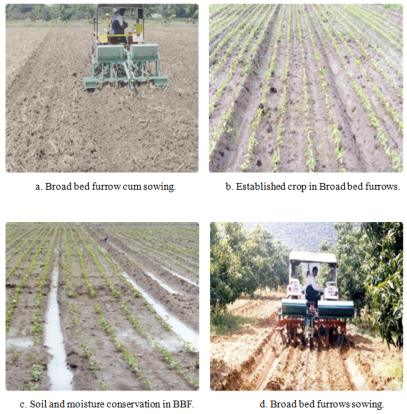
Broad beds and furrows as Engineering Measures.
Runoff water is channelled into agricultural furrows in a large bed-and-furrow arrangement (30 cm wide and 30 cm deep). The field furrows are obstructed at the bottom. When one furrow is full, the water flows into the following field furrow via the head furrow. Crops are cultivated in large beds around 170 cm wide between the field furrows .
Table 3. Crop yield increment as a result of BBF.

The place where the experiment Conducted

Type of crop

Grain yield increment (%) compared with flat seedbeds

Delanta Dawunt woreda, North Wollo

Wheat

51.4

Debre Zeit

Bread Wheat

78

Teff

25*

Ginchi, Enewari, Ambo, Sinja and Bichena

Faba bean (Vicia faba L.)

46–49

Sources: .
* denotes a smaller yield increment due to Teff's higher relative waterlogging tolerance.
Figure 1. Layout of Broad Bed Furrow Structures.
Table 4. General description of BBF.

Function

To control erosion and to conserve soil moisture in the soil during rainy days.

General information

It is suitable when the slope of the land is < 3%

The broad bed and furrow system are laid within the field boundaries

Land levels are taken and it is laid using either animal-drawn or tractor-drawn ridges

Cost

The approximate cost for laying beds and furrows is Rs. 1000/ ha.

Salient features

Conserves soil moisture in dryland Controls soil erosion Acts as a drainage channel during heavy rainy days

Additionally, the Wonji-Shoa Sugar Bequest, one of Ethiopia's large-scale water system frameworks with about half of its ranch zone secured in overwhelming dark clay soils, has seen expansive abdicate decreases (roughly 45 percent of the 1960s made potential) in later a long time, fundamentally due to waterlogging and its related issues .
2.1. On-Farm Management Strategies
Farmers use a variety of methods to reduce salinity. These strategies are largely concerned with water management, crop selection, cultural practices, and the use of chemical and biotic amendments. The choice of measure is heavily influenced by farm characteristics as well as the farmer's and colleague farmers' experience. Farming practices that are commonly used .
2.2. Improved Irrigation Practices
Most farmers are aware of the benefits of enhanced irrigation procedures, but a lack of exposure to and familiarity with such practices, combined with current constraints (labour, equipment, etc.), makes them hesitant to try them. In addition to knowledge of different irrigation practices, different experts have given approaches of application irrigation water to the field.
2.3. Deficit Irrigation
As cited by deficit irrigation refers to deliberate under-irrigation of a crop when compared to its evaporative and leaching needs. As a result, farmers are forced to utilize stored soil water from the rains or preseason irrigation and capillary up-flow from the water table to water their crops. Leaching, Amendments (kind and rate of application), Crop selection, and Cultural practices (e.g. tillage and irrigation method and irrigation scheduling).
2.4. Watershed and Environmental Management
Ethiopia's land and water degradation, which drastically reduces agricultural production, is primarily caused by soil erosion. Many portions of irrigation schemes have already been abandoned due to salinity issues brought on by waterlogging. All irrigation development projects must take into account watershed and environmental management, especially in lowland areas that are vulnerable to salinization due to poor soil quality. The GOE must incorporate watershed safeguard measures into its proposal to deliver irrigation schemes since environmental and ecosystem conservation are necessary for successful irrigation development .
Table 5. Major activities and their effects on integrating watershed and environmental management.

Actions suggested targeted results

Activities proposed Targeted outcomes

Connect watershed management (WSM) initiatives to the expansion of irrigation Incorporate methods to manage salinity and drainage.

Appropriate watershed management investment can increase the performance and lifespan of irrigation infrastructure.

Create a strategy to manage salinity Incorporate downstream water usage demands and environmental fluxes in design and water use.

Ample consideration of the salinity concern will result in much better irrigation performance.

Connect WSM interventions to health issues to reduce the negative effects of irrigation on health.

Conflicts can be avoided, funders' interest is piqued, and sustainable development is provided when environmental flows, ecosystems, and downstream demands are properly taken into account.

Water-borne disease risk is decreased by having adequate drainage and water management systems in place.

Sources and Cause of Salinity.
Natural salty groundwater tables and shallow groundwater table seeps are the main sources and causes of saltiness. Secondary salinization has also been linked to poor drainage and improper irrigation water management . Irrigation projects that were not adequately planned and were not backed by innovative management of irrigation and drainage technology had caused substantial deterioration in the Awash basin, which is responsible for roughly one-third of the country's total irrigated acreage, causing salt and sodicity concerns . This problem of high salinity is also linked to unregulated irrigation and a lack of understanding of Water requirements for crops and water management which results in a rise in saline groundwater levels or capillary rise . Agricultural production in Ethiopia's saline plains is increasingly challenged by natural imperatives, resulting in lower crop efficiency. Changes in adjacent ecological, socioeconomic, and edaphic circumstances are linked to variations in crop yield over wholly different salinity-prone areas. The major factors that cause salinity to increase in Ethiopia are listed below .
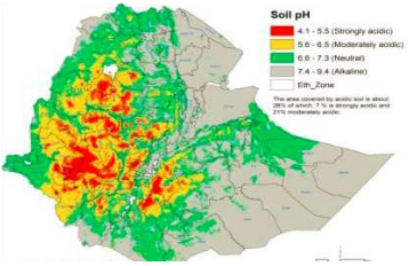
Figure 2. Extent and distribution of soil acidity in Ethiopia.
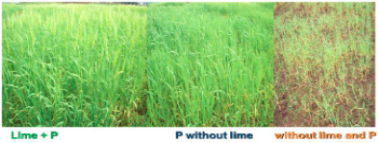
Figure 3. Growth of barley with lime and P, with P alone and without lime in acidic soils of Welmera and Endibir. Source: .
The agriculture sector is facing increasing challenges in the face of changing climate, rapid population growth, increasing salinity accumulation, and land degradation, decreasing availability of land, waterlogging, and competition for scarce water resources.
2.5. Water Deficiency for Irrigation and Waterlogging
In Ethiopia, salt-affected areas are found in parched, semi-arid, and lowland dry ranges (which account for 60% of the country's geographical area) where precipitation is neither adequate nor consistent enough for commercial crop cultivation. The water system is critical in these areas for agricultural production to remain stable. Farmers used to construct flood-based cultivating frameworks in a variety of.
Soil salinity difficulties are spreading throughout Ethiopia's flooded areas of dry and semi-arid lowlands, generating major social (movement and illnesses) and economic (decreased crop production and increased poverty) problems . Proper management of soil and water salinity requires firstly a sufficient understanding of the root zone soil salinity level, extent, magnitude, and distribution in the irrigation project's fields (a proper inventory of conditions).
Secondly, the ability to detect changes and trends in soil salinity over time, as well as the impact of management adjustments (an appropriate monitoring program). Thirdly, the ability to detect and diagnose salinity problems, as well as the underlying inherent causes of observed situations, both natural and created by management (a proper method of detecting and diagnosing problems and their causes). Fourthly, a way to assess the appropriateness and effectiveness of current irrigation and drainage systems, operations, and practices in terms of soil salinity control and lastly the capacity to identify places in fields and irrigation projects where there is excessive deep percolation, i.e., where water and salt are being loaded into the underlying groundwater (a suitable means of determining areal sources of pollution). The aforesaid set of measurement-related techniques and methodologies, as well as the means of evaluation, is referred to as salinity assessment .
2.6. Effects of Waterlogging on Crop Growth and Environment
Plant growth is hampered by waterlogging, which reduces the aeration of the soil around the root zone . Early planting is forbidden with traditional management systems in the hills of the north-central due to the presence during the major rainy season, there is a risk of seasonal waterlogging. This reduces the length of the growing cycle .
The impact of waterlogging on cotton vegetative growth and yield is determined by the amount of time the root system is exposed to low soil O2 concentrations (O2 10%), soil type, and developmental stage They observed that nutrient concentrations in cotton leaves were relatively more sensitive to waterlogging during peak flowering compared with late reproductive stages .
Waterlogging causes stagnant water, which can be a breeding ground for disease vectors like malaria, snails, and slugs. It deteriorates sanitary conditions and can spread diseases such as malaria and bilharzia, leading to an unfavorable environment for humans, animals, and plants in the area .
2.7. Management of Salinity Problems
Water management is the most important factor in reducing the severity and extent of soil salinity. Water management can be approached in two ways: first, managing areas that contribute extra water to the soil/recharge area, and second, managing areas where excess water comes to the surface discharge area .
2.7.1. Recharge Management
Divert surface water to downslope ponds to prevent surplus water from seeping into the soil in seep recharge zones. Do not over-irrigate to keep the water table at a low and safe level. Overwatering and a lack of natural drainage have raised water tables in some locations, necessitating the deployment of an artificial drainage system. The discharge of saline water from these sewers may cause further difficulties offsite. Irrigate to keep salt levels in the soil below the root zone. Cropping and tillage techniques that provide proper infiltration and permeability are recommended. Building organic matter for soil aggregation and reducing compaction are two examples. Plant crops that take advantage of the moisture in the soil. Shallow-rooted plants may not be able to take excess subsoil moisture, resulting in salinity.
Using actively growing, deep-rooted plants, remove excess water from seep recharge regions. Because perennial plants and forages, particularly alfalfa, have a longer growing season and can absorb more water from a greater depth in the soil than annual plants, they are useful for this purpose. Forages can also help to improve soil structure by increasing organic matter in the soil. Increase soil water retention by returning manure and crop leftovers to the soil. Reduce summer fallow by cultivating regularly. Snow should be managed so that it is evenly distributed and does not pound when it thaws .
2.7.2. Discharge Management
Plant salt-tolerant plants. In high-risk areas, convert to permanent soil cover using salt-tolerant crops. Reduce deep tillage, which can cause salts from deeper soil layers to rise to the surface. To boost water use, plant forage crops or trees near bodies of water. Only in the most badly impacted areas should artificial drainage systems be installed. Irrigation canals, dugouts, and ponds should all be free of seepage. Cropping, structural approaches, and tillage systems should all be used in an integrated strategy to control .
2.8. Remedies for Salinization Problem Under the Agricultural Land
Soluble salts can be leached out as a remedy. This necessitates sufficient soil permeability, high-quality irrigation water, and enough drainage. Temporary salinity management can be done by increasing soil permeability, such as through deep tillage or organic residue assimilation .
2.8.1. Chemical Remediation of Sodic and Saline-sodic Soils
Chemical additives also raise the salinity of the soil, reducing or even eliminating soil crusting. Gypsum and gypsum-like by-products such as phosphogypsum (a by-product of the manufacturing of phosphoric acid), coal gypsum (a by-product generated from coal power plants), and Lacto gypsum are the most extensively utilized chemical additives (a by-product from the manufacture of lactic acid and lactates) .
These products are typically applied to the soil surface to avoid soil crusting or introduced into the soil to treat sodic soil. The doses are determined by the soil and amendment properties. The theoretical amount of gypsum required per hectare to replace 1 molecule of exchangeable Na per kg of dry soil in a layer of 30 cm and with a mean soil bulk density of 1.3 g cm .
Other highly soluble additions, such as calcium chloride and calcium nitrate, are also conceivable, but they are usually more expensive. The high pH values of sodic soils are usually reduced via sodicity treatment. The cation precipitates with the carbonate and bicarbonate anions when the soil gets saturated with Ca, decreasing the pH. The speed of this process is aided by the biological activity in the soil .
2.8.2. Bioremediation of Sodic and Saline-Sodic Soils
By making Ca available to replace Na in the soil's exchange complex, phytoremediation can be employed for Na removal in a similar way to chemical amelioration. Other processes, such as halophyte salt bioaccumulation in aboveground biomass, have been demonstrated to be ineffective in lowering soil salinity .
As a result, the method of salt removal via phytoremediation necessitates a source of Ca, which is commonly calcite found in soils. The plants' involvement in this process is to boost CO2 levels in the root zone, which aids calcite dissolution. Bacterial activity can help elevate CO2 levels in the root zone even more. In circumstances of low to moderate pollution, phytoremediation can be used. Studies have demonstrated that phytoremediation can produce equivalent or better results than chemical remediation, but it necessitates more detailed and complicated planning during the remediation process (crop rotation, irrigation timings, etc.). Waterlogging reduces nutrient availability, O2 diffusion, and cellular respiration, which influence plant water relations and impair biomass gain. Yield losses are greatly exacerbated by the developmental effects of waterlogging .
Farmers may find phytoremediation to be a more cost-effective mitigating option. It's also better for the environment because it doesn't require synthetic products and improves carbon sequestration. Because of this, root exudates and calcite dissolution, studies have demonstrated that they can also improve total nutrient availability to plants. When opposed to chemical treatment, Na removal happens more consistently and in-depth because it occurs along with the root depth, for example, alfalfa roots can reach 1.2 m deep.
3. Conclusions
Waterlogging and salinization are the two major environmental issues worldwide, particularly in dry and semi-arid regions of agricultural land. These issues have a significant impact on soil fertility, which has a significant impact on soil productivity and minimizes yield obtained from agricultural land. It is becoming a major limitation in the development of vegetable crops. The production of vegetable crops necessitates a large amount of fertilizer and water each possibly increasing soil salinity. By interfering with nitrogen intake, lowering growth, and preventing plant reproduction, salinity has an impact on the crop, pasture, and tree output. Salinization of soils results in several chemical, physical and biological problems. It is generally caused by an excessive application of saline water and it is physically noticeable at the soil surface. Capillary motion can carry salt from a salt-laden water table to the soil surface, where it accumulates due to evaporation. It is more lucrative to manage water logging through biological drainage activities and crop variety selection in connection to rising salt levels. In developing countries, waterlogging and salinity are becoming a severe problem, particularly near agricultural land. Groundwater tables that are too shallow and accompanying salinity concerns have grown commonplace in agricultural field areas around the world and an environmental impact assessment should be included in any irrigation project plan. Developing specialized techniques for the reclamation of saline and waterlogged soils based on management waterlogging and applications such as surface or subsurface drainage, gypsum, or salt-tolerant plant adapted. Although water management practices for dealing with irrigation induced over time, the effects of soil salinization and waterlogging have been widely documented, it is critical to determine whether they are economically justified within a given situation by considering the economic situation with our farmers and recommend the simplest for farmers.
4. Recommendations
Surface and subsurface drainages must be installed to minimize groundwater rise that leads to salinization due to salts dropped in soil when the rise-up groundwater evaporates and general recommendations must be forwarded to minimize the risk of salinization and salt accumulation in the soils of the command area by considering economic benefits and farmer’s status at the current time. In regions where there is a lot of salt, salt-tolerant (salt-loving) plants should be planted to minimize the effects and to tolerate impacts. While planning and implementing waterlogging and salinization management in agricultural lands, community engagement should be improved by recognizing environmental, economic, and social challenges as well. The current waterlogging and salinization problem is being addressed through agricultural land management initiatives carried out by a variety of groups, including a huge public awareness campaign and NGOs. To pick the proper remedies, design, and specification, technical support and monitoring should be strengthened. Enclosures, tree and shrub planting, management, agroforestry, fortifying structures with grass or shrub, and other biological interventions should be prioritized whenever possible due to their many sustaining roles. Many case studies have shown that biology is effective. The existing motivation and mobilization for participatory waterlogging and salinity management should be maintained, and the plan should be supported by national policies aimed at raising awareness about both issues. Interventions should always follow the hierarchy from top to bottom and vice versa for waterlogging and salinization logic, starting uphill and working down to the farmers, for the best results, but they should not be conducted in fragmented distributions.
Abbreviations

EC

Electrical Conductivity

BBF

Broad Bed Furrow

WSM

Watershed Management

GOE

Gosh Watershed in Ethiopia

pH

Potential of Hydrogen or "Power of Hydrogen

Author Contributions
Ayana Bulti Olana is the sole author. The author read and approved the final manuscript.
Conflicts of Interest
The author declares no conflicts of interest.
References
[1] Asad, S. Q., Tesfaye, E., & Melese, M. (2018). Prospects of alternative cropping systems for salt-affected soils in Ethiopia. Journal of Soil Science and Environmental Management, 9(7), 98–107.
[2] Aslam, M., & Prathapar, S. A. (2006). Strategies to mitigate secondary salinization in the Indus Basin of Pakistan: a selective review. In IWMI Research Report 097 (Issue July).
[3] Costantini, E. A. C. (n. d.). EIP AGRI Focus Group Soil Salinization Starting Paper. 1‑11.
[4] El-Nashar, W. Y. (2013). The Combined Effect of Water-logging and Salinity on Crops Yield. IOSR Journal of Agriculture and Veterinary Science, 6(4), 40–49.
[5] European Commission (EC). (2020). EIP-AGRI Focus Group Soil salinization. July, 37.
[6] Gebrehiwot, K. A. (2018). A review on waterlogging, salinization and drainage in Ethiopian irrigated agriculture. Sustainable Water Resources Management, 4(1), 55–62.
[7] Gebremeskel, G., Gebremicael, T. G., Kifle, M., Meresa, E., Gebremedhin, T., & Girmay, A. (2018). Salinization pattern and its spatial distribution in the irrigated agriculture of Northern Ethiopia: An integrated approach of quantitative and spatial analysis. Agricultural Water Management, 206(May), 147–157.
[8] Gelaye, K. K., & Vienna, L. S. (2019). Salinity Prediction and Mitigation Measures to Reduce Soil Salinity on Irrigated Land in Awash Basin, Ethiopia. June.
[9] Gorji, T., Yıldırım, A., Sertel, E., & Tanık, A. (2019). Remote sensing approaches and mapping methods for monitoring soil salinity under different climate regimes. International Journal of Environment and Geoinformatics, 6(1), 33–49.
[10] Hussain, B., Khan, A. S., & Ali, Z. (2015). Genetic variation in wheat germplasm for salinity tolerance at seedling stage: Improved statistical inference. Turkish Journal of Agriculture and Forestry, 39(2), 182–192.
[11] Major Areas Dryland Agriculture (p. 2020). http://agritech.tnau.ac.in/agriculture/agri_majorareas_dryland_agromeasures_summer_ploughing
[12] Merga, B., & Ahmed, A. (2019). Turkish Journal of Agriculture - Food Science and Technology A Review on Agricultural Problems and Their Management in Ethiopia. Turkish Journal of Agriculture - Food Science and Technology Available, 7(8), 1189–1202.
[13] Milroy SP, Bange MP, Thongbai P. 2009. Cotton leaf nutrient concentrations in response to waterlogging under field conditions. Field Crops Research 113: 246 –255.
[14] Ploschuk, R. A., Miralles, D. J., Colmer, T. D., Ploschuk, E. L., & Striker, G. G. (2018). Waterlogging of winter crops at early and late stages: Impacts on leaf physiology, growth and yield. In Frontiers in Plant Science (Vol. 871).
[15] T. Frew Abebe, Tena Alamirew, and F. A. (2015). Appraisal and Mapping of Soil Salinity Problem in Amibara Irrigation Farms, Middle Awash Basin, Ethiopia. International Journal of Innovation and Scientific Research, 13(1), 298–314.
[16] USDA Natural Resources Conservation Service. (1998). Soil Quality Resource Concerns: Salinization. Soil Quality Information Sheet, January.
[17] Wudu, A., & Mahider, W. (2020). Soil Salinity and Its Management Options in Ethiopia, Journal of Environmental and Earth Science, 3, 1–9.
[18] Yazdanpanah, N., Pazira, E., Neshat, A., Naghavi, H., Moezi, A. A., & Mahmoudabad, M. (2011). Effect of some amendments on leachate properties of a calcareous saline-sodic soil. International Agrophysics, 25(3), 307–310.
[19] Zaman, M., Shahid, S. A., & Heng, L. (2018). Guideline for Salinity Assessment, Mitigation and Adaptation Using Nuclear and Related Techniques
[20] . In Guideline for Salinity Assessment, Mitigation and Adaptation Using Nuclear and Related Techniques.
[21] Central Soil Salinity Research Institute, Karnal Haryana, I. and International Institute for Land Reclamation and Improvement, (Alterra - ILRI) Wageningen, The Netherlands, Acharya N. G. Ranga Agricultural University, Hyderabad, Andhra Pradesh, India, University, University of Agricultural Sciences, Dharwad - Karnataka, I. (2002) Recommendations on Waterlogging and Salinity Control Based on Pilot Area Drainage Research Central, Intech.
[22] Seleshi BEKELE Awlachew, T. E. and R. N. (2010) ‘Irrigation potential in Ethiopia Constraints and opportunities for enhancing Irrigation potential in Ethiopia Constraints and opportunities for enhancing the system International Water Management Institute Teklu Erkossa and Regassa E. Namara’, (January).
[23] Getachew Agegnehu, Chilot Yirga, and Teklu Erkossa. 2019. Soil Acidity Management. Ethiopian Institute of Agricultural Research (EIAR). Addis Ababa, Ethiopia.
[24] ATA (Agricultural Transformation Agency) (2014) Annual Report. ATA, Addis Ababa, Ethiopia.
Cite This Article
  • APA Style

    Olana, A. B. (2025). Effects and Mitigations Reviews of Water Logging and Salinity Problems on Agricultural Land in the Case of Ethiopia. Engineering and Applied Sciences, 10(2), 18-26. https://doi.org/10.11648/j.eas.20251002.12

    Copy | Download

    ACS Style

    Olana, A. B. Effects and Mitigations Reviews of Water Logging and Salinity Problems on Agricultural Land in the Case of Ethiopia. Eng. Appl. Sci. 2025, 10(2), 18-26. doi: 10.11648/j.eas.20251002.12

    Copy | Download

    AMA Style

    Olana AB. Effects and Mitigations Reviews of Water Logging and Salinity Problems on Agricultural Land in the Case of Ethiopia. Eng Appl Sci. 2025;10(2):18-26. doi: 10.11648/j.eas.20251002.12

    Copy | Download

  • @article{10.11648/j.eas.20251002.12,
      author = {Ayana Bulti Olana},
      title = {Effects and Mitigations Reviews of Water Logging and Salinity Problems on Agricultural Land in the Case of Ethiopia
    },
      journal = {Engineering and Applied Sciences},
      volume = {10},
      number = {2},
      pages = {18-26},
      doi = {10.11648/j.eas.20251002.12},
      url = {https://doi.org/10.11648/j.eas.20251002.12},
      eprint = {https://article.sciencepublishinggroup.com/pdf/10.11648.j.eas.20251002.12},
      abstract = {This paper reviews sources, causes, extent, effect, and remedies of problems with waterlogging and salinity in the agricultural land in the case of Ethiopia. Due to extensive seepage into the groundwater and agricultural problems land suffers from waterlogging and salinization. These issues can be managed by using either preventive or corrective strategies. Waterlogging and salinization are serious obstacles to the long-term viability of irrigated agricultural lands and the livelihoods of farmers in the afflicted areas, particularly smallholders. Waterlogging and salinization are caused by a variety of circumstances, including seepage from unlined clay canals, insufficient surface and subsurface drainage, poor water management methods, insufficient water supply, and irrigation with low-quality groundwater. According to the reviews, the surface drainage systems built were initially successful in lowering groundwater levels in an agricultural area selected based on the economy of the farmer. Overall success was restricted, however, due to poor system operation and maintenance, as well as a lack of suitable facilities for the disposal of saline drainage effluent. To put it another way, lowering groundwater levels through deep tube wells, salt leaching from excessive irrigation, chemical additions (gypsum, acids, organic matter), and biological and physical approaches are all options. Generally, this review paper gives an overview of several solutions for waterlogging and salinity concerns as well as their appropriateness and limitations in areas of agricultural lands.
    },
     year = {2025}
    }
    

    Copy | Download

  • TY  - JOUR
    T1  - Effects and Mitigations Reviews of Water Logging and Salinity Problems on Agricultural Land in the Case of Ethiopia
    
    AU  - Ayana Bulti Olana
    Y1  - 2025/04/29
    PY  - 2025
    N1  - https://doi.org/10.11648/j.eas.20251002.12
    DO  - 10.11648/j.eas.20251002.12
    T2  - Engineering and Applied Sciences
    JF  - Engineering and Applied Sciences
    JO  - Engineering and Applied Sciences
    SP  - 18
    EP  - 26
    PB  - Science Publishing Group
    SN  - 2575-1468
    UR  - https://doi.org/10.11648/j.eas.20251002.12
    AB  - This paper reviews sources, causes, extent, effect, and remedies of problems with waterlogging and salinity in the agricultural land in the case of Ethiopia. Due to extensive seepage into the groundwater and agricultural problems land suffers from waterlogging and salinization. These issues can be managed by using either preventive or corrective strategies. Waterlogging and salinization are serious obstacles to the long-term viability of irrigated agricultural lands and the livelihoods of farmers in the afflicted areas, particularly smallholders. Waterlogging and salinization are caused by a variety of circumstances, including seepage from unlined clay canals, insufficient surface and subsurface drainage, poor water management methods, insufficient water supply, and irrigation with low-quality groundwater. According to the reviews, the surface drainage systems built were initially successful in lowering groundwater levels in an agricultural area selected based on the economy of the farmer. Overall success was restricted, however, due to poor system operation and maintenance, as well as a lack of suitable facilities for the disposal of saline drainage effluent. To put it another way, lowering groundwater levels through deep tube wells, salt leaching from excessive irrigation, chemical additions (gypsum, acids, organic matter), and biological and physical approaches are all options. Generally, this review paper gives an overview of several solutions for waterlogging and salinity concerns as well as their appropriateness and limitations in areas of agricultural lands.
    
    VL  - 10
    IS  - 2
    ER  - 

    Copy | Download

Author Information
  • Abstract
  • Keywords
  • Document Sections

    1. 1. Introduction
    2. 2. Effects of Waterlogging and Salinization Problems on Agricultural Land
    3. 3. Conclusions
    4. 4. Recommendations
    Show Full Outline
  • Abbreviations
  • Author Contributions
  • Conflicts of Interest
  • References
  • Cite This Article
  • Author Information